
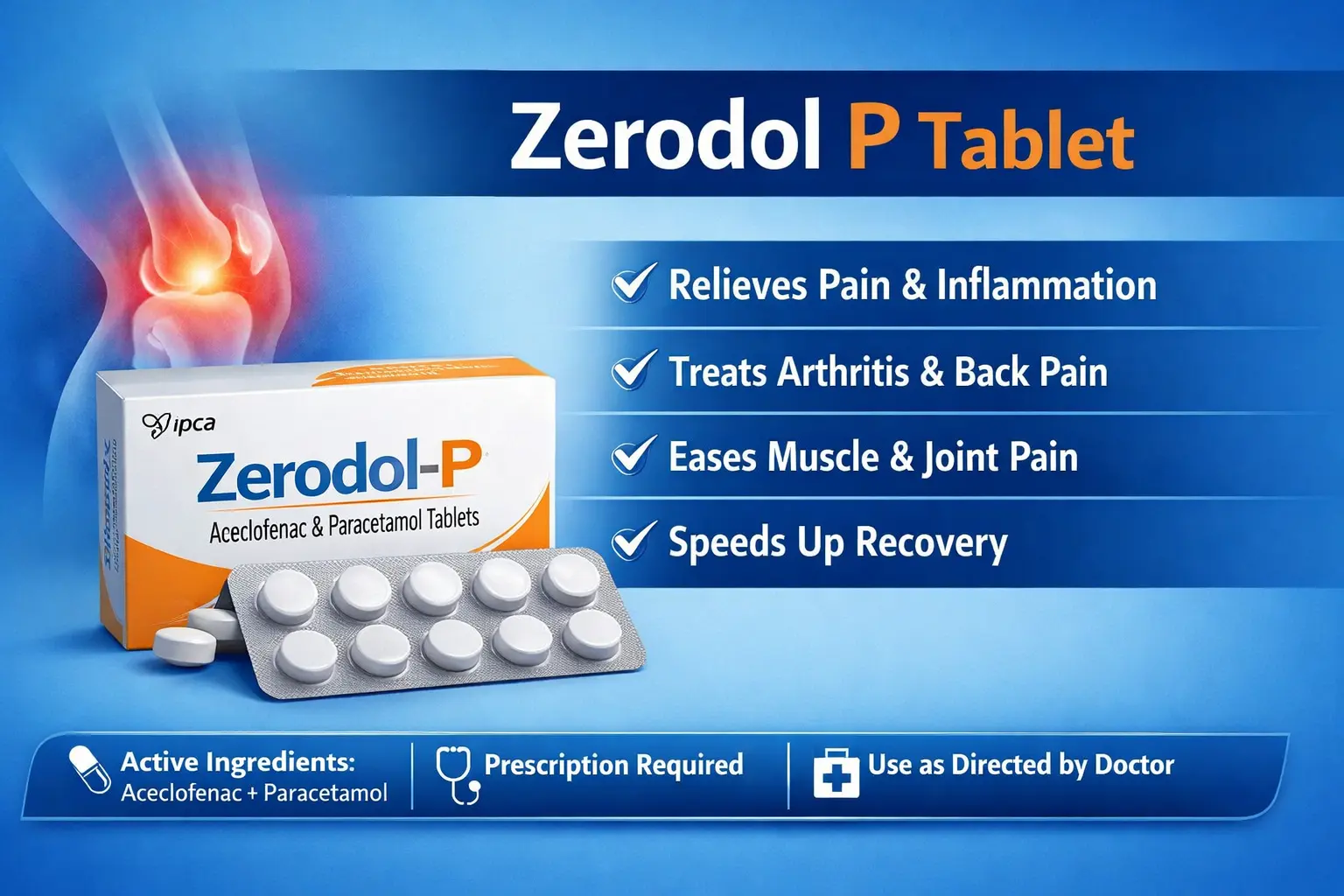
Pain and inflammation can make daily life uncomfortable and difficult. Doctors often prescribe medications that reduce pain while controlling swelling and fever. One commonly prescribed medicine for this purpose is Zerodol P.
Zerodol P is a combination pain-relief medication widely used to treat conditions like arthritis, muscle pain, toothache, and other inflammatory problems. Because it contains two active ingredients that work together, it can provide effective relief from moderate pain and inflammation.
In this guide, you will learn everything about Zerodol P, including its uses, dosage, side effects, precautions, interactions, and safety tips.
What is Zerodol P?
Zerodol P is a prescription pain-relief tablet that contains two active medicines:
- Aceclofenac (100 mg) – a non-steroidal anti-inflammatory drug (NSAID)
- Paracetamol (325 mg) – an analgesic and antipyretic
Together, these ingredients help reduce pain, inflammation, and fever.
Doctors commonly prescribe Zerodol P for conditions involving musculoskeletal pain, joint inflammation, or injury-related pain.
Zerodol P Composition
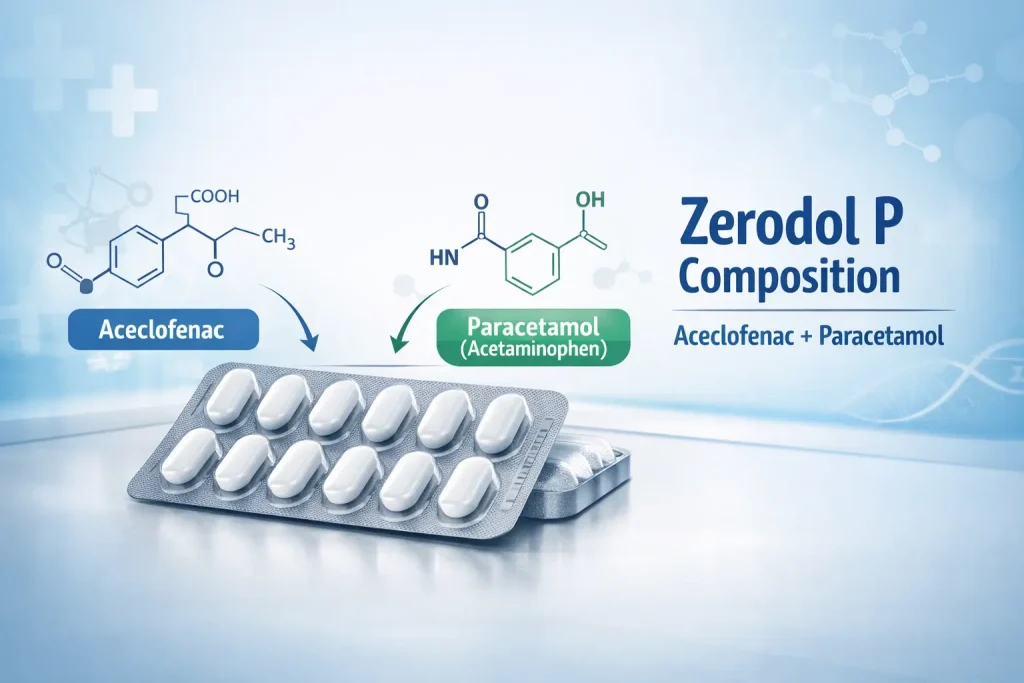
Each Zerodol P tablet typically contains:
| Ingredient | Role |
|---|---|
| Aceclofenac 100 mg | Reduces inflammation and swelling |
| Paracetamol 325 mg | Relieves pain and lowers fever |
Aceclofenac controls the inflammatory process in the body, while paracetamol helps reduce pain signals and fever.
Zerodol P Uses
Doctors prescribe Zerodol P for many pain-related conditions.
Common uses include:
Arthritis Pain
Zerodol P helps manage pain and stiffness caused by:
- Osteoarthritis
- Rheumatoid arthritis
- Ankylosing spondylitis
Muscle Pain
It is effective for relieving muscle strain, sports injuries, and muscle inflammation.
Dental Pain
Dentists often prescribe Zerodol P after dental procedures or tooth infections to reduce pain and swelling.
Back Pain
People with lower back pain or spinal inflammation may benefit from this medication.
Post-Surgical Pain
Doctors may recommend Zerodol P after surgery to manage moderate pain.
Menstrual Pain
In some cases, it may help relieve menstrual cramps caused by inflammation.
Fever with Body Pain
Because it contains paracetamol, Zerodol P may help reduce fever accompanied by body aches.
How Zerodol P Works
Zerodol P works by targeting chemicals in the body responsible for pain and inflammation.
Aceclofenac Action
Aceclofenac blocks enzymes called cyclo-oxygenase (COX). These enzymes produce prostaglandins, which cause inflammation, swelling, and pain.
By blocking these chemicals, aceclofenac reduces inflammation and discomfort.
Paracetamol Action
Paracetamol acts on the brain’s pain centers and temperature-regulating area, reducing pain signals and lowering fever.
Combined Effect
Together, these two medicines provide faster and more effective relief than either medicine alone.
Zerodol P Dosage
The dosage of Zerodol P depends on the patient’s condition, age, and medical history.
Typical medical advice includes:
- Usually 1 tablet once or twice daily
- Taken after food
- Swallowed whole with water
Important dosage guidelines:
- Do not exceed the prescribed dose
- Follow the doctor’s instructions carefully
- Do not take it for long periods without medical advice
What to Do If You Miss a Dose
If you forget to take a dose:
- Take it as soon as you remember
- Skip the missed dose if the next dose is near
- Do not take two tablets together
Taking extra doses increases the risk of side effects.
What Happens in Case of Overdose
Taking too much Zerodol P may lead to serious health problems.
Possible overdose symptoms include:
- Severe nausea
- Vomiting
- Liver damage
- Stomach pain
- Drowsiness
- Confusion
Seek immediate medical attention if an overdose occurs.
Zerodol P Side Effects
Like all medicines, Zerodol P may cause side effects in some people.
Common Side Effects
These usually improve with time:
- Nausea
- Stomach pain
- Dizziness
- Indigestion
- Diarrhea
- Constipation
- Fatigue
Serious Side Effects
Seek medical help immediately if you notice:
- Severe allergic reactions
- Swelling of face or throat
- Blood in urine or stools
- Severe stomach pain
- Breathing difficulty
- Skin rashes
These symptoms may indicate serious reactions.
Who Should Avoid Zerodol P
Some individuals should not take Zerodol P without medical supervision.
Avoid this medicine if you have:
- Allergy to NSAIDs
- History of stomach ulcers
- Severe liver disease
- Severe kidney problems
- Heart disease
- Bleeding disorders
Always consult your doctor before using the medication.
Precautions and Warnings
Pregnancy
Zerodol P is not recommended during pregnancy, especially in the third trimester.
Breastfeeding
The medicine may pass into breast milk. Always consult a doctor before use.
Liver Disease
Because paracetamol affects the liver, people with liver problems should use it cautiously.
Kidney Problems
Aceclofenac may affect kidney function in some patients.
Elderly Patients
Older adults may experience side effects more easily and should use the medicine carefully.
Zerodol P Interactions
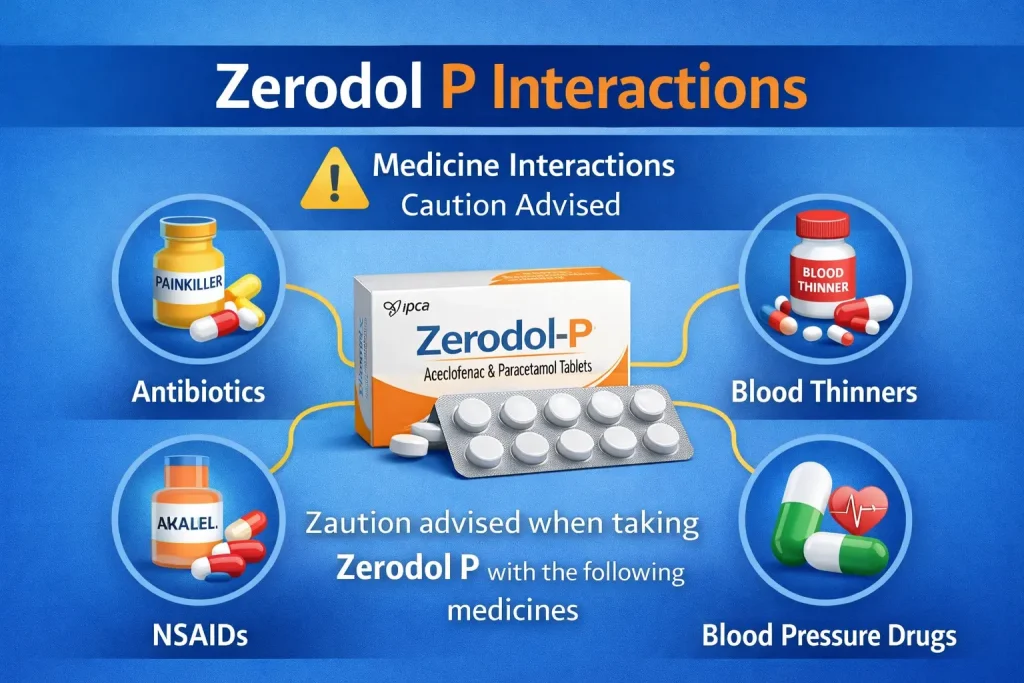
Zerodol P can interact with certain medicines and increase side-effect risks.
Possible drug interactions include:
Blood Thinners
- Warfarin
- Aspirin
These combinations may increase bleeding risk.
Blood Pressure Medicines
- Enalapril
- Losartan
- Metoprolol
The effectiveness of BP medicines may decrease.
Diuretics
These medicines may increase kidney stress when combined with NSAIDs.
Other NSAIDs
Taking other anti-inflammatory drugs together increases stomach bleeding risk.
Always inform your doctor about all medicines you are taking.
Food and Alcohol Interaction
Food
Taking Zerodol P after food helps reduce stomach irritation.
Alcohol
Avoid alcohol while taking Zerodol P because it may increase the risk of:
- Liver damage
- Stomach bleeding
- Dizziness
Zerodol P vs Dolo 650
| Feature | Zerodol P | Dolo 650 |
|---|---|---|
| Main ingredients | Aceclofenac + Paracetamol | Paracetamol |
| Main use | Pain + inflammation | Fever and mild pain |
| Strength | Stronger anti-inflammatory effect | Mild pain relief |
| Prescription | Usually required | Sometimes OTC |
Zerodol P vs Zerodol SP
| Feature | Zerodol P | Zerodol SP |
|---|---|---|
| Composition | Aceclofenac + Paracetamol | Aceclofenac + Paracetamol + Serratiopeptidase |
| Use | General pain and inflammation | Severe inflammation or swelling |
| Strength | Moderate | Stronger anti-inflammatory action |
Storage Instructions
Proper storage helps maintain medicine safety.
Store Zerodol P:
- At room temperature
- Away from sunlight
- Away from moisture
- Out of reach of children
Do not use expired medication.
Lifestyle Tips for Pain Management
Medicine alone may not fully control pain. Healthy habits can help.
Helpful lifestyle tips:
- Maintain a healthy weight
- Do gentle stretching exercises
- Use warm compress or ice packs
- Rest injured joints or muscles
- Avoid excessive physical strain
These steps can support recovery and reduce pain.
Frequently Asked Questions About Zerodol P
Is Zerodol P an antibiotic?
No. Zerodol P is a painkiller and anti-inflammatory medicine, not an antibiotic.
Can Zerodol P treat cold or flu?
It may reduce fever and body pain but does not cure infections.
Is Zerodol P safe for headaches?
Yes, doctors sometimes prescribe it for headache and migraine pain.
How long does Zerodol P take to work?
Pain relief usually begins within 30–60 minutes after taking the tablet.
Can Zerodol P cause sleepiness?
Some people may feel dizziness or drowsiness after taking the medicine.
Can children take Zerodol P?
It is usually prescribed for adults. Children should only take it if advised by a doctor.
Final Thoughts
Zerodol P is a commonly prescribed medicine used to treat pain, inflammation, and fever. Its combination of aceclofenac and paracetamol makes it effective for conditions like arthritis, dental pain, muscle injuries, and back pain.
However, like all medications, it should be used responsibly and only under medical guidance. Following proper dosage instructions and understanding possible side effects can help ensure safe use.
If pain persists or worsens, consult a healthcare professional for proper diagnosis and treatment.
