
Introduction
NSW Health roster management is complex, especially in a system as vast as NSW Health. Hospitals operate 24/7, patient demand changes rapidly, and staff must meet strict compliance requirements.
The NSW Health roster is designed to solve these challenges by ensuring the right health care professionals are scheduled at the right time. It improves patient care, supports staff wellbeing, and helps healthcare facilities run efficiently.
In this guide, you’ll learn everything about the NSW Health roster, how it works, its benefits, challenges, and how modern systems are transforming workforce management.
What Is the NSW Health Roster?
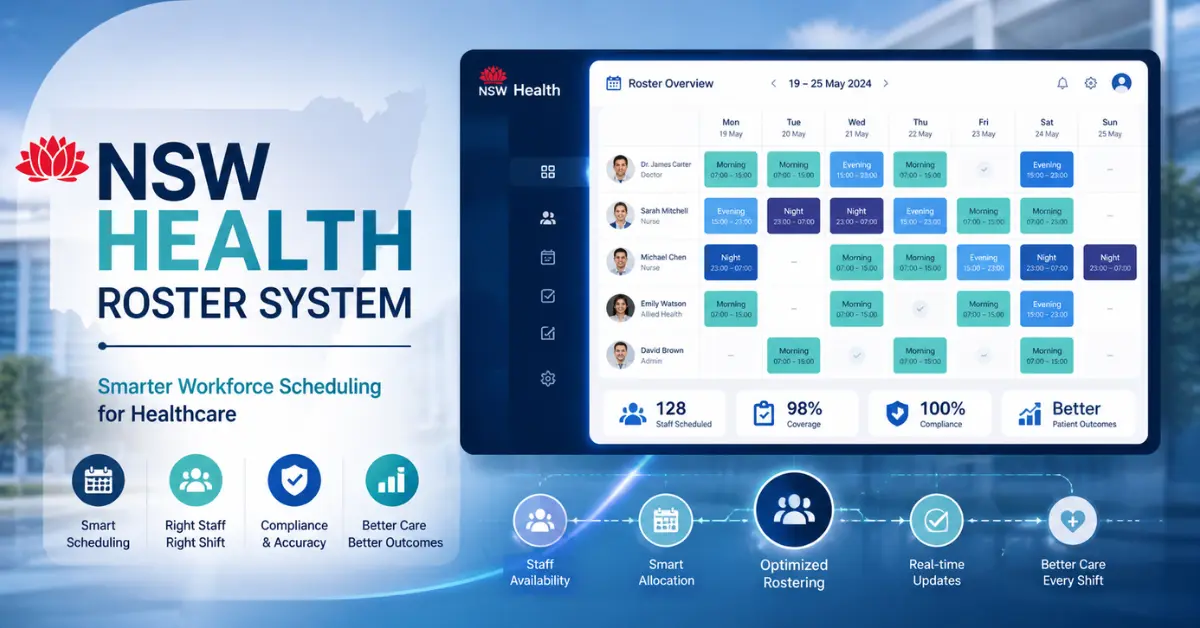
The NSW Health roster is a digital workforce scheduling system used to manage health care staff across hospitals and medical facilities.
It helps administrators:
- Schedule staff shifts
- Track attendance and working hours
- Manage availability and leave
- Ensure compliance with healthcare regulations
- Optimize workforce planning
Unlike manual scheduling, the system uses automation and real-time data to reduce errors and improve efficiency.
How the NSW Health Roster Works
The system follows a structured process to ensure accurate scheduling:
Staff Data Collection
- Roles, skills, and certifications are recorded
- Availability and preferences are updated
Shift Planning
- Shifts are created based on patient demand
- Staffing requirements are defined
Automated Scheduling
The system assigns staff based on:
- Skills
- Availability
- Workload balance
Real-Time Updates
- Staff receive instant notifications for changes
- Managers can adjust schedules quickly
Monitoring and Reporting
- Data is analyzed to improve efficiency
- Staffing trends and costs are tracked
Why the NSW Health Roster Is Important
Improves Patient Care
Proper scheduling ensures qualified professionals are always available, reducing delays and improving outcomes.
Supports Staff Wellbeing
Fair shift distribution prevents burnout and improves job satisfaction.
3. Ensures Compliance
Healthcare regulations require strict staffing rules. The roster system helps meet legal requirements automatically.
4. Reduces Costs
Efficient rostering minimizes overtime and reduces reliance on temporary staff.
Challenges in Traditional Rostering (Before Digital Systems)
Many healthcare facilities faced serious issues before adopting modern systems:
- Manual scheduling errors (double bookings, missed shifts)
- Lack of transparency in shift allocation
- Staff burnout due to poor workload distribution
- Disconnected systems across departments
- Limited flexibility during emergencies
Key Features of the NSW Health Roster System
Automated Scheduling
Assigns shifts automatically based on staff skills and availability.
Skill-Based Matching
Ensures the right professional is assigned to the right role.
Mobile Access
Staff can:
- View schedules
- Swap shifts
- Request leave
Real-Time Notifications
Instant updates reduce confusion and missed shifts.
Compliance Management
Automatically applies:
- Break rules
- Work limits
- Healthcare regulations
Payroll Integration
Reduces errors by syncing attendance with payroll systems.
Analytics and Reporting
Provides insights into:
- Staffing efficiency
- Labour costs
- Workforce trends
Manual vs Digital Rostering
| Feature | Manual Roster | Digital Roster |
|---|---|---|
| Accuracy | Low | High |
| Time Required | High | Low |
| Transparency | Limited | High |
| Compliance | Risky | Automated |
| Flexibility | Low | High |
Benefits of the NSW Health Roster
For Staff
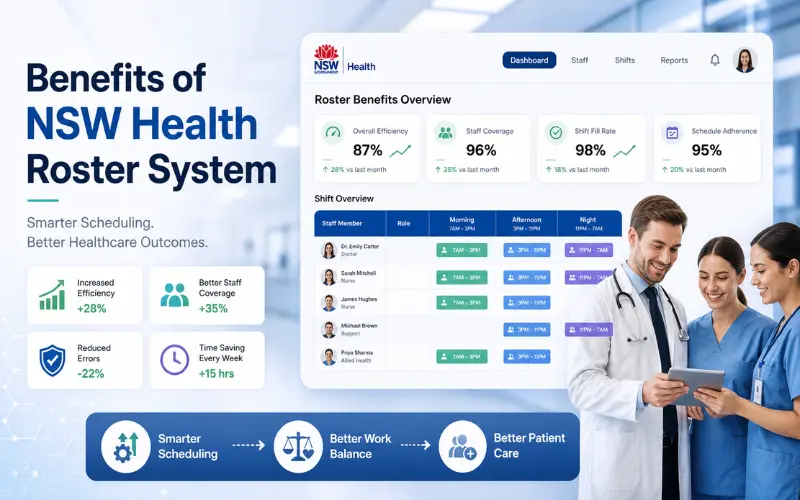
- Fair shift allocation
- Better work-life balance
- Easy access to schedules
- Flexible shift swapping
For Management
- Reduced administrative workload
- Improved workforce planning
- Real-time visibility
- Better decision-making
For Patients
- Consistent quality of care
- Reduced waiting times
- Better access to skilled professionals
Real-World Impact: NSW Health Transformation
Before implementing a unified roster system:
- Multiple systems were used
- Heavy reliance on manual processes
- Poor visibility across facilities
After implementation:
A single standardized system was introduced
Workforce planning improved
Data-driven decisions became possible
Staff satisfaction increased
Advanced Insights on NSW Health Roster Optimization
Rostering Directly Impacts Hospital Revenue
Poor scheduling leads to:
- Overtime costs
- Underutilized staff
- Financial inefficiencies
Staff Preferences Matter More Than Ever
Modern systems allow preference-based scheduling, which:
- Improves retention
- Reduces turnover
Data Is the Real Advantage
The biggest benefit isn’t automation — it’s data insights:
- Predict staffing needs
- Identify inefficiencies
- Improve long-term planning
Shift Swapping Reduces Manager Workload
Allowing staff to swap shifts (with approval) saves hours of admin work.
How to Implement an NSW Health Roster System
Step 1: Analyze Current Workflow
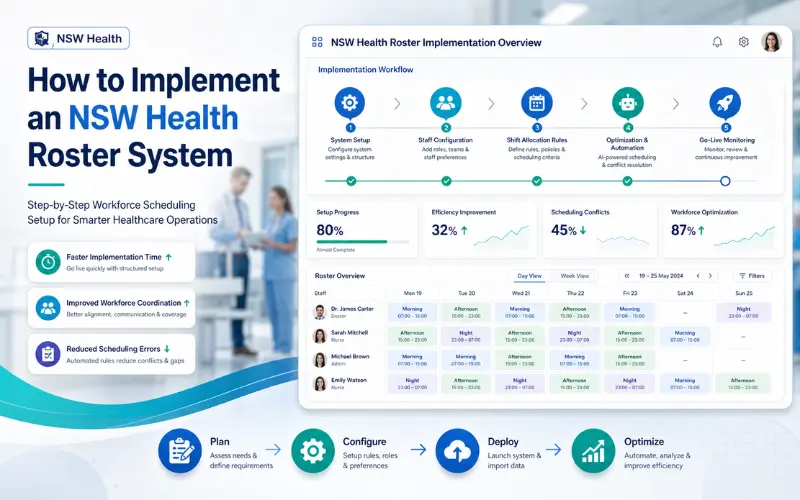
Identify gaps and inefficiencies.
Step 2: Choose the Right System
Look for:
- Ease of use
- Compliance features
- Integration capabilities
Step 3: Configure Rules
Set up:
- Pay structures
- Legal requirements
Step 4: Train Staff
Ensure smooth adoption.
Step 5: Monitor Performance
Track:
- Efficiency
- Staff satisfaction
- Cost savings
Future of the NSW Health Roster
Healthcare rostering is evolving rapidly with:
- AI-powered scheduling
- Predictive workforce planning
- Real-time optimization
- Fully integrated systems
These advancements will further improve efficiency and patient care.
FAQs
What is the NSW Health roster?
The NSW Health roster is a system used to schedule healthcare staff efficiently across hospitals and facilities.
Why is the NSW Health roster important?
It ensures proper staffing, improves patient care, reduces costs, and maintains compliance.
How does the NSW Health roster work?
It uses automation and real-time data to assign shifts based on staff skills and availability.
Can the NSW Health roster reduce costs?
Yes, it minimizes overtime and improves workforce allocation.
Is the NSW Health roster easy to use?
Modern systems are user-friendly and accessible via mobile devices.
Conclusion
The NSW Health roster is a critical tool for managing healthcare staff effectively. By replacing manual scheduling with a smart, data-driven system, it improves efficiency, ensures compliance, and enhances both staff and patient outcomes.
Healthcare organizations that adopt modern rostering systems gain a clear advantage in delivering high-quality, reliable care.
