
Introduction
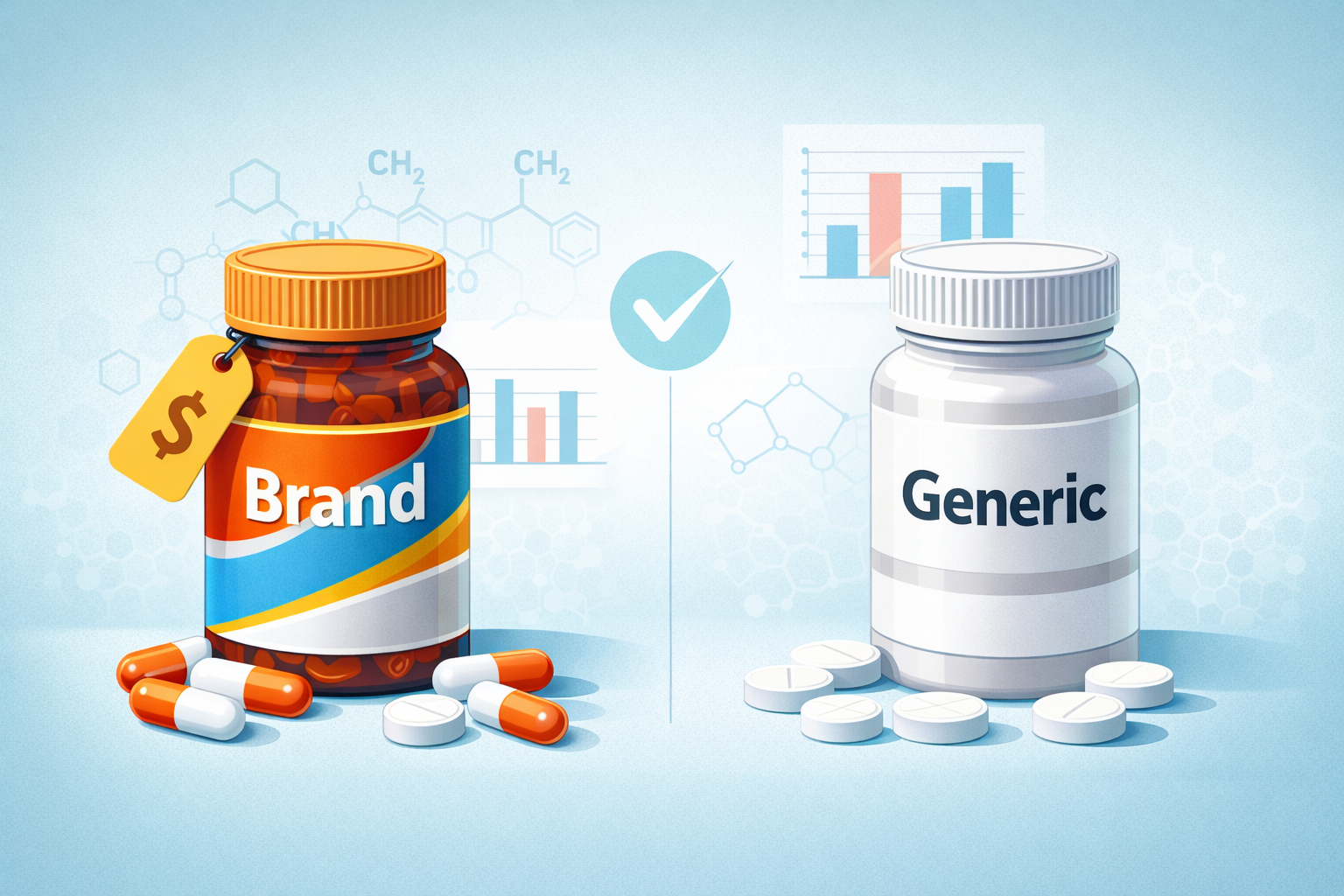
Generic vs brand medicine difference is an important topic for patients choosing prescription medications, as it affects cost, safety, and treatment effectiveness.While both serve the same purpose—treating illnesses and managing health conditions—many patients are unsure of the differences and sometimes hesitate to switch from a familiar brand to a generic alternative.
Understanding these differences is not only important for cost savings, but also for treatment adherence, patient safety, and making informed healthcare decisions. This guide explains everything you need to know about generic and brand medicines, including safety, effectiveness, cost, global usage trends, and practical tips for choosing the right option.
What Are Generic Medicines?
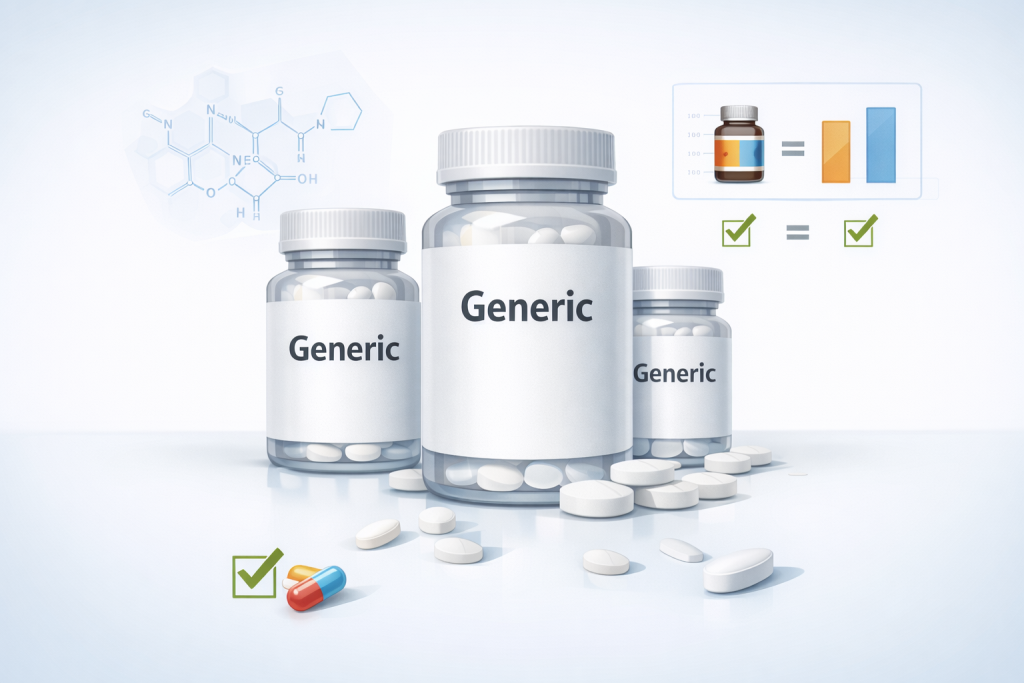
A generic medicine is a drug that is chemically identical to a brand-name medication in terms of its active ingredient, dosage, strength, and route of administration. It is therapeutically equivalent, meaning it produces the same effect in the body as the brand drug.
Regulatory Definitions
- World Health Organization (WHO): A generic medicine is interchangeable with a brand drug and is marketed after patent or exclusivity rights expire.
- US Food and Drug Administration (FDA): A generic drug must be comparable to a brand (reference listed drug) in strength, dosage form, route of administration, quality, performance, and intended use.
How Generic Medicines Are Made
Generic manufacturers do not need to invest in the extensive research and development (R&D) required for a brand drug. The active ingredient is already known, so generic production focuses on ensuring bioequivalence, quality, and safety.
- Bioequivalence: The generic drug must deliver the same amount of active ingredient to the bloodstream in the same timeframe as the brand.
- Inactive ingredients: These may differ (fillers, binders, colorants), but they do not affect therapeutic effectiveness.
Cost Advantages of Generics
Generic medicines are typically 50–80% cheaper than brand-name drugs. This is primarily due to:
- No R&D expenses: Generic manufacturers use the pre-established active ingredient.
- Shorter approval process: Regulatory authorities allow a faster route for generics.
- Market competition: Multiple generic companies producing the same drug lowers the price.
Example:
- Brand drug: Lipitor® (atorvastatin)
- Generic equivalent: Atorvastatin
Both drugs lower cholesterol equally, but the generic is significantly cheaper.
What Are Brand/Original Medicines?
Brand-name or original medicines are drugs developed, patented, and marketed by pharmaceutical companies. These drugs are protected by patents for a specific period (usually 20 years) to recover costs associated with research, clinical trials, and marketing.
Key Points About Brand Medicines
- R&D investment: Developing a brand drug involves years of preclinical and clinical trials to prove safety and efficacy.
- Patent protection: This exclusivity allows the company to market the drug without competition for a set period.
- Cost: Brand medicines are often more expensive due to R&D, patent protection, and marketing expenses.
- When brand is necessary: Certain drugs, such as those with a narrow therapeutic index (NTI), require exact dosing, making brand drugs preferred in some cases.
Key Similarities Between Generic and Brand Medicines
Despite differences in appearance, cost, and packaging, generic and brand medicines share most of their important characteristics:
| Feature | Generic Medicine | Brand Medicine |
|---|---|---|
| Active Ingredient | Same as brand | Same as generic |
| Effectiveness | Therapeutically equivalent | Proven in clinical trials |
| Safety | Same regulatory standards | Same regulatory standards |
| Dosage & Strength | Identical | Identical |
| Route of Administration | Same (oral, topical, injection, etc.) | Same |
| Intended Use | Treats the same condition | Treats the same condition |
| Quality | Strict manufacturing standards | Strict manufacturing standards |
| Bioequivalence | Must meet regulatory standards | Not applicable |
This ensures that switching from a brand to a generic does not compromise safety or efficacy, except in certain NTI drugs or cases of allergic reactions to fillers.
Key Differences Between Generic and Brand Medicines
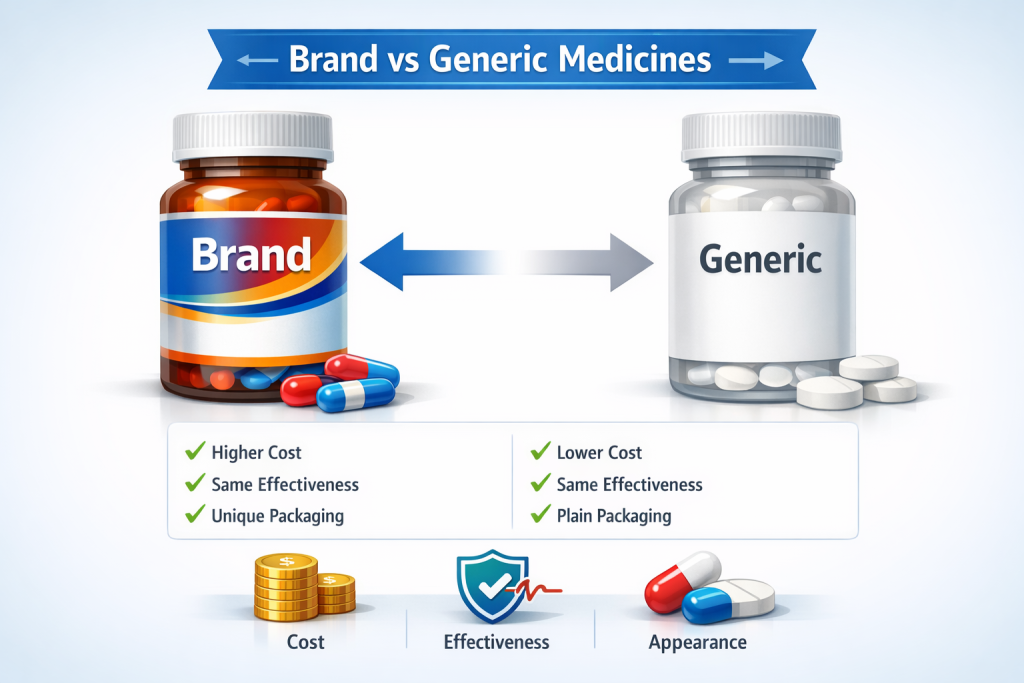
While generics are equivalent in therapeutic effect, there are some differences patients may notice:
Cost
- Generics are significantly cheaper due to lower development and marketing expenses.
- Brand medicines are higher-priced because of R&D, clinical trials, and patent protection.
Appearance
- Generics may differ in color, shape, size, or flavor.
- Trademark laws prevent copying the exact look of the brand.
Inactive Ingredients
- Different fillers, binders, or dyes may be used.
- These rarely affect the drug’s action but may cause mild allergic reactions in sensitive patients.
Packaging
- Brand medicines often use distinctive packaging and branding.
- Generic medicines may have simpler packaging.
Availability
- Generics become widely available after the brand patent expires.
- Brand medicines are limited to the exclusivity period.
Global Usage Trends
United States
- About 9 out of 10 prescriptions are generic.
- Generics save billions annually while maintaining quality and safety.
Kenya
- There is no strict preference for brand or generic.
- Usage depends on availability, prescriber judgment, and affordability.
- Insurance data shows roughly 70% of prescriptions are for branded drugs, but generic use is increasing.
Europe & Asia
- Countries like Germany, UK, and Japan have policies encouraging generic prescriptions to reduce health care costs.
- Generic uptake varies depending on regulations, public awareness, and pricing policies.
Practical Guidance for Patients
Choosing between generic and brand medicines depends on availability, cost, health condition, and patient preference. Here are practical tips:
When to Choose Generic
- Cost is a major concern.
- No history of allergic reactions to inactive ingredients.
- The medication is not an NTI drug.
When to Choose Brand
- For NTI drugs (e.g., warfarin, levothyroxine), small dose differences matter.
- Allergic reactions to generic excipients.
- If a patient has responded better to a specific brand in the past.
- No generic alternative is available.
Ask Your Pharmacist or Doctor
- Discuss safety, cost, and your condition before switching.
- Check bioequivalence approval by regulatory authorities.
- Monitor for unexpected side effects after switching.
Insurance & Affordability
- Generics are often preferred by insurance for lower copays.
- Some insurance plans may cover brand drugs only under specific circumstances.
FAQs About Generic vs Brand Medicines
Q1: Can I switch from brand to generic safely?
Usually yes, but consult your doctor for NTI drugs or chronic conditions.
Q2: Are generics as effective as brand medicines?
Yes. Generics provide the same therapeutic effect and efficacy.
Q3: Why are generics cheaper?
Lower development costs, no expensive clinical trials, and market competition.
Q4: Are all drugs available in generic form?
No. Generics only appear after brand patents expire.
Q5: Can generics cause side effects?
Generally, side effects are the same. Occasionally, inactive ingredients may cause mild reactions.
Conclusion
Understanding the differences and similarities between generic and brand medicines empowers patients to make informed healthcare choices.
- Generics provide safe, effective, and cost-saving alternatives for most medications.
- Brand medicines remain important for NTI drugs, allergies, or specific clinical scenarios.
- Patients should always consult healthcare providers when deciding to switch, ensuring treatment safety, adherence, and affordability.
By staying informed, patients can balance cost, safety, and effectiveness while maximizing health outcomes.
