

Many people search “STD full form” for exams, general knowledge, or health awareness.
But most articles only give the definition — they don’t explain what it actually means in real life.
This guide will help you understand:
- Full form of STD
- Different meanings in different fields
- Health risks and symptoms
- Testing and prevention
- Real-life examples
Everything explained in simple language.
What Is the Full Form of STD?
STD stands for Sexually Transmitted Disease.
It is a disease that spreads mainly through sexual contact between two people.
The infection spreads through:
- Vaginal sex
- Oral sex
- Anal sex
- Skin-to-skin genital contact
- Blood or needle sharing
- Mother to baby during pregnancy
Important:
An STD begins as an STI (Sexually Transmitted Infection).
When symptoms or damage start, it becomes a disease (STD).
Other Meanings of STD (Exam Purpose)
STD can have different meanings depending on context.
| Field | Full Form | Meaning |
|---|---|---|
| Medical | Sexually Transmitted Disease | Infection spread through sexual contact |
| Telephone | Subscriber Trunk Dialing | Long-distance calling system |
| Education | Standard | Class level (Std. 8, Std. 10) |
Tip:
In biology questions → medical meaning
In telecom questions → telephone meaning
What Are Sexually Transmitted Diseases?
STDs are infections caused by bacteria, viruses, or parasites that pass from one person to another during intimate contact.
More than 30 infections belong to this category.
Types of STDs (Very Important)
Bacterial STDs (Curable)
- Chlamydia
- Gonorrhea
- Syphilis
- Treated using antibiotics.
Viral STDs (Not Fully Curable but Controllable)
- HIV/AIDS
- Herpes
- HPV (Genital Warts)
- Hepatitis B
Managed using long-term medicine.
Parasitic STDs
- Trichomoniasis
- Curable with medication.
How Do STDs Spread?

Many people think only intercourse spreads STDs — that is incorrect.
They spread through:
- Unprotected sex
- Oral contact
- Genital touching
- Sharing needles
- Blood contact
- Pregnancy transmission
Even a single exposure can infect a person.
Early Symptoms of STDs
In Men
- Burning during urination
- Discharge from penis
- Pain in testicles
- Sores or rash
In Women
- Unusual vaginal discharge
- Lower abdominal pain
- Bleeding between periods
- Pain during intercourse
Most people show no symptoms at first but still spread infection.
STD Incubation Period
| Disease | Symptoms Appear After |
|---|---|
| Gonorrhea | 2–7 days |
| Chlamydia | 1–3 weeks |
| Herpes | 2–12 days |
| Syphilis | 10–90 days |
| HIV | 2–4 weeks |
| HPV | Months or years |
This is why people think they are healthy but unknowingly infect partners.
When Should You Get Tested?
Testing immediately after sex is not always accurate
| Time After Contact | Recommended Test |
|---|---|
| 1 week | Gonorrhea |
| 2 weeks | Chlamydia |
| 4 weeks | Syphilis |
| 6 weeks | Early HIV |
| 3 months | Final HIV test |
What Happens If STDs Are Not Treated?
Ignoring STDs can cause serious problems:
- Infertility
- Pregnancy complications
- Chronic pelvic pain
- Organ damage
- Cancer (HPV)
- Weak immune system (HIV)
Can STDs Go Away On Their Own?
No.
Sometimes symptoms disappear but infection remains inside the body.
This silent stage is dangerous because it continues damaging organs.
Treatment Options
Completely Curable
- Chlamydia
- Gonorrhea
- Syphilis
- Trichomoniasis
Lifelong Management
- HIV
- Herpes
- HPV
- Hepatitis B
Medicine controls symptoms and prevents complications.
Prevention Tips
You can greatly reduce risk by:
- Using condoms every time
- Getting vaccinated (HPV & Hepatitis B)
- Limiting partners
- Regular testing
- Avoid sharing needles
- Mutual testing before new relationship
Condoms reduce risk by up to 98%.
What To Do After Unsafe Sex
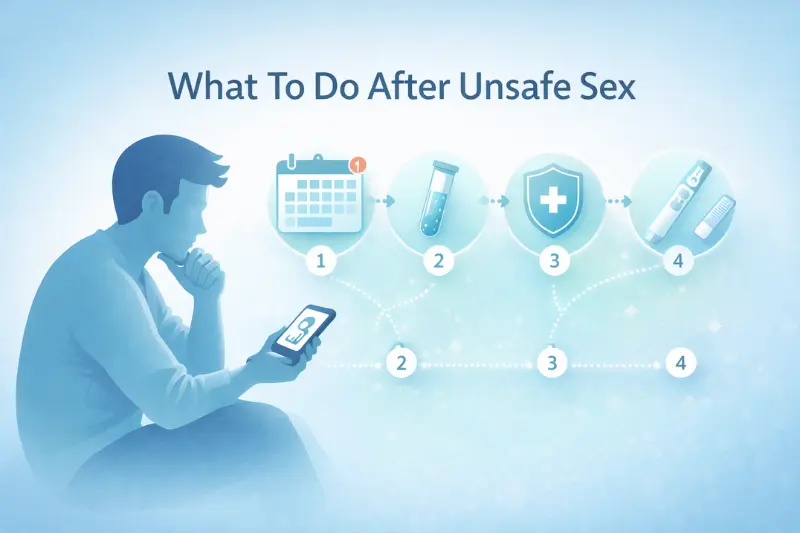
Within 72 hours:
- Avoid further sexual activity
- Wash the area
- Consult a doctor
- Take HIV preventive medicine (PEP)
- Schedule STD testing
Quick action can prevent infection.
Frequently Asked Questions
What is STD full form in medical?
Sexually Transmitted Disease.
What is STD full form in telephone?
Subscriber Trunk Dialing — a long-distance call system.
Are all STDs dangerous?
Some are mild and curable, but untreated infections can cause severe complications.
Can a healthy looking person have STD?
Yes. Many people carry infection without symptoms.
Conclusion
The full form of STD is Sexually Transmitted Disease, but understanding its meaning is more important than just memorizing it. STDs are common, preventable, and treatable when detected early, and awareness, safe practices, and timely testing help protect both your health and your future relationships. Learning about STDs is therefore not only exam knowledge but also important life knowledge.
