
How to improve mental health is essential for overall well-being. It affects how we think, feel, and act, shaping our relationships, productivity, and ability to handle life’s challenges.
In this guide, you’ll discover practical, research-backed strategies that go beyond what most articles provide, helping you improve mental health in a sustainable way.
Understanding Mental Health and Wellbeing
- Mental health refers to your emotional, psychological, and social well-being. It shapes how you handle stress, relate to others, and make decisions.
- Mental wellbeing is feeling balanced, resilient, and capable of managing life’s challenges, even if you have a mental health condition.
Key fact: Mental health is not static—it can improve with habits, support, and the right interventions.
Why Improving Mental Health is Important
Good mental health helps you:
- Cope effectively with stress and adversity
- Build and maintain strong relationships
- Make informed decisions and solve problems
- Boost creativity and productivity
- Enjoy life and maintain physical health
Research shows: People with better mental health have lower risks of chronic illnesses like heart disease and diabetes, as mental and physical health are closely linked.
Common Risk Factors for Mental Health
Understanding what negatively impacts mental health can help you prevent problems.
- Individual factors: Genetics, sleep deprivation, poor nutrition, chronic stress
- Social factors: Loneliness, toxic relationships, bullying
- Environmental factors: Unsafe neighborhoods, pollution, poverty, traumatic events
- Life events: Job loss, divorce, financial stress, or major life transitions
Tip: Early identification of risk factors allows proactive steps to protect your mental health.
Protective Factors That Strengthen Mental Health
Building resilience over time is key. Protective factors include:
- Social connections: Family, friends, community involvement
- Emotional skills: Self-awareness, coping strategies, and emotional regulation
- Sense of purpose: Hobbies, career goals, volunteering, spiritual practices
- Access to resources: Therapy, support groups, online tools
Real-life example: Volunteering for just 2 hours per week has been linked to reduced stress and improved self-esteem in multiple studies.
Actionable Steps to Improve Mental Health
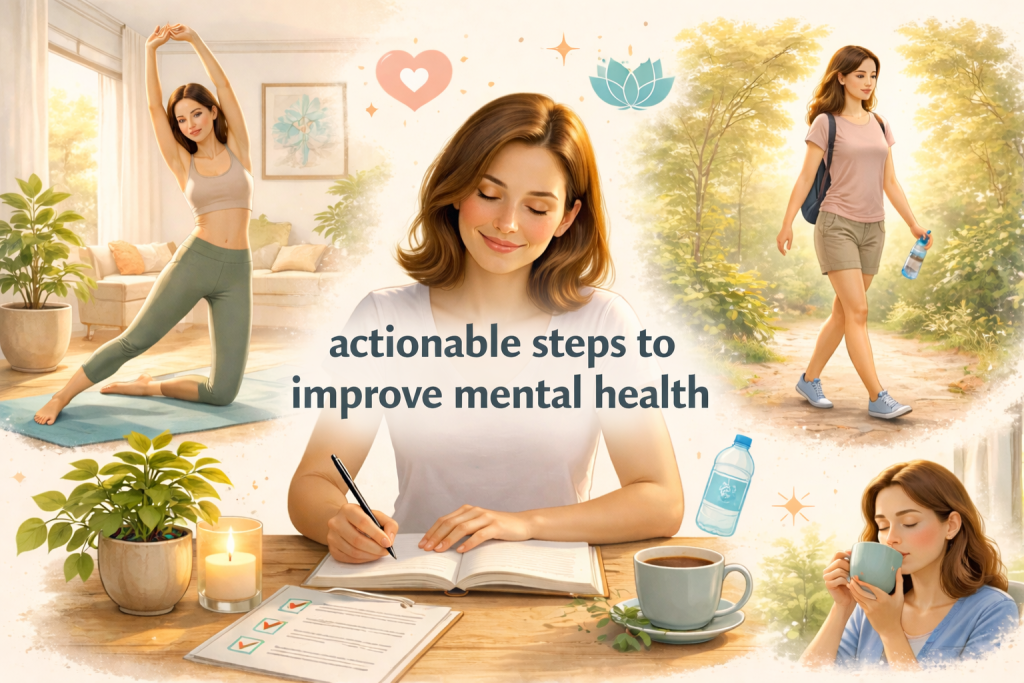
Here’s a comprehensive plan with daily, weekly, and monthly practices:
Daily Habits for Mental Wellness
- Sleep: Maintain 7–9 hours of quality sleep. Use a consistent bedtime routine.
- Nutrition: Eat balanced meals rich in vitamins, minerals, and omega-3s. Avoid excess sugar and processed foods.
- Exercise: 20–30 minutes daily reduces stress and improves mood. Even a brisk walk counts.
- Hydration: Proper hydration improves cognitive function and energy.
- Sunlight exposure: Helps regulate circadian rhythms and boosts serotonin levels.
Mindfulness & Relaxation Techniques
- Meditation: Practice mindfulness or guided meditation for 10–20 minutes daily.
- Deep breathing exercises: Slow, controlled breathing reduces cortisol (stress hormone) levels.
- Progressive muscle relaxation: Relieve tension by tensing and relaxing each muscle group.
- Yoga and stretching: Combines movement with mindfulness for body-mind balance.
- Nature therapy: Spending 20–30 minutes outdoors reduces anxiety and improves mood.
Pro tip: Combine mindfulness with nature for maximum stress reduction. For example, a 15-minute mindful walk in a park can improve focus and mood for hours.
Strengthening Social and Community Support
- Talk to someone you trust: Friends, family, or counselors.
- Peer support groups: Sharing experiences with people facing similar challenges fosters understanding and resilience.
- Community involvement: Join clubs, volunteer, or participate in local events to build a sense of belonging.
Research shows that strong social connections can increase life expectancy by up to 50% and reduce the risk of depression.
Developing Coping Skills
Effective coping skills help you handle life stressors:
- Journaling: Express thoughts and process emotions.
- Cognitive reframing: Challenge negative thoughts and replace them with realistic perspectives.
- Digital detox: Reduce exposure to social media to prevent comparison and anxiety.
- Creative outlets: Drawing, music, writing, or crafting improves mood and focus.
Using Modern Tools & Technology
- Mental health apps: Calm, Headspace, Moodfit help track moods, meditate, and manage anxiety.
- Online therapy platforms: Affordable, accessible therapy sessions.
- AI wellness trackers: Track sleep, stress, and mental health patterns for proactive care.
- Digital communities: Safe spaces for peer support and learning coping skills.
Physical Health as a Mental Health Strategy
- Regular exercise improves serotonin and endorphins.
- Nutrition affects brain function—Omega-3, magnesium, and vitamin D improve mood.
- Hydration, avoiding excessive caffeine and alcohol, and maintaining a routine support mental wellness.
Extra tip: Even light housework or gardening counts as physical activity and improves mental state.
Creating a Personal Mental Health Plan
- Identify triggers and stressors.
- Track your daily mood and habits.
- Set realistic, small goals: e.g., 10-minute meditation, a 20-minute walk, or journaling nightly.
- Review progress weekly and adjust strategies.
Pro tip: Keep a “mental health toolkit” with coping resources, comforting items, or calming exercises.
When to Seek Professional Help
Seek help if you experience:
- Persistent sadness, anxiety, or mood swings
- Trouble functioning at work, school, or home
- Thoughts of self-harm or hopelessness
Professional support may include therapy, counseling, or medications. Early intervention leads to faster recovery and better outcomes.
Additional Research-Backed Tips Competitors Didn’t Cover

- Brain training exercises: Puzzles, memory games, and learning new skills strengthen cognitive health.
- Micro-breaks during work: 5–10 minutes breaks every hour reduce mental fatigue.
- Laughter therapy: Watching comedies or social laughter groups reduce cortisol and increase happiness.
- Gratitude practice: Writing 3 things you are grateful for daily boosts resilience and emotional health.
- Sound therapy: Listening to nature sounds or calming music lowers stress and promotes relaxation.
FAQs About Mental Health Improvement
Q1: How long does it take to see improvements?
Small improvements may be noticeable in a few weeks, but consistent practice over months leads to lasting change.
Q2: Can apps replace therapy?
No, apps are supportive tools. Professional guidance is necessary for serious mental health issues.
Q3: Are mindfulness practices really effective?
Yes, mindfulness reduces stress, improves focus, and enhances overall well-being.
Q4: Can diet and exercise really affect mental health?
Absolutely. Physical health directly influences mood, energy, and cognitive function.
Q5: What if I struggle to maintain these habits?
Start small, pick one habit at a time, and gradually build a routine. Consistency is more important than intensity.
Conclusion
Improving mental health is a lifelong journey. Combining daily habits, mindfulness, social support, coping strategies, physical care, and modern tools ensures comprehensive well-being. Start small, track your progress, and celebrate each positive step.
Remember: Mental health is not a destination—it’s a practice. With consistent effort, emotional balance, and supportive relationships, you can lead a more resilient, happy, and fulfilling life.
