
Introduction:
MRI full form: Magnetic Resonance Imaging.
In the world of modern healthcare, medical imaging plays a crucial role in diagnosing and monitoring diseases. One commonly used and highly advanced imaging technique is MRI. Many people hear this term during medical consultations but may not fully understand what it means. In this article, we will explain the MRI full form, how it works, its uses, and why it is important in medical science.
MRI Full Form
You May Also Like It:
Tesamorelin: Benefits, Uses & Side Effects Guide
Prednisona: usos, efectos y cómo tomarla
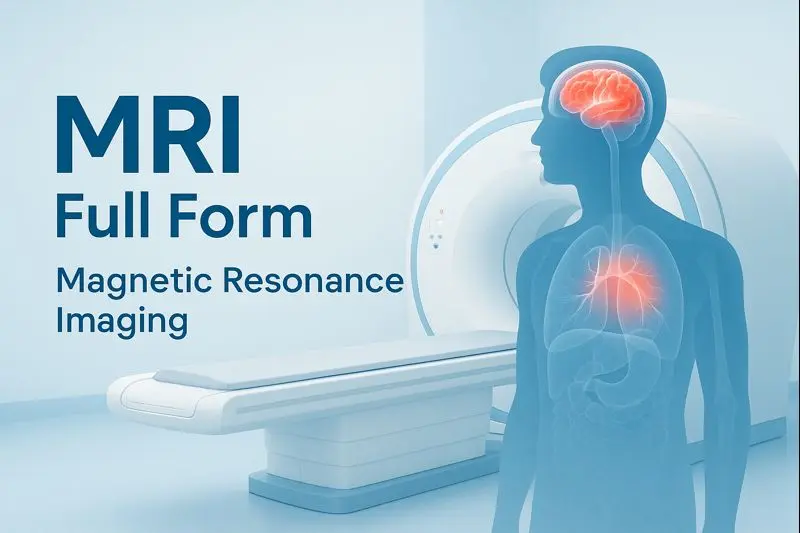
The full form of MRI is Magnetic Resonance Imaging.
MRI is a non-invasive medical imaging technique that helps doctors view detailed images of organs, tissues, and structures inside the human body without using harmful radiation.
What Is MRI?
Magnetic Resonance Imaging (MRI) is a diagnostic tool that uses strong magnetic fields, radio waves, and a computer system to create detailed images of the inside of the body. Unlike X-rays or CT scans, MRI does not use ionizing radiation, making it a safer option for many patients.
MRI scans are especially useful for examining soft tissues such as the brain, spinal cord, muscles, ligaments, and internal organs.
How Does an MRI Machine Work?
An MRI machine works by aligning hydrogen atoms in the body using a powerful magnetic field. When radio waves are applied, these atoms release signals that are captured by the machine. A computer then processes these signals to form clear and detailed images of the body parts being examined.
The entire process is painless, although the machine can be noisy and may require the patient to lie still for a period of time.
Uses of MRI
You May Also Like It:
Gabapentina 300 mg: qué es y para qué sirve
Phenol Peel – Deep Skin Treatment That Works
MRI is widely used in medical diagnosis and treatment planning. Some common uses include:
- Brain and spinal cord imaging to detect tumors, strokes, or injuries
- Joint and muscle evaluation for ligament tears or sports injuries
- Heart and blood vessel imaging to assess heart conditions
- Detection of tumors and cancers in various organs
- Monitoring chronic diseases such as multiple sclerosis
Advantages of MRI
MRI offers several benefits, including:
- No exposure to ionizing radiation
- Highly detailed images of soft tissues
- Accurate diagnosis of complex medical conditions
- Safe for repeated use when required
Are There Any Limitations of MRI?
While MRI is extremely useful, it does have some limitations:
- It can be expensive compared to other imaging methods
- The scan may take longer than X-rays or CT scans
- Not suitable for patients with certain metal implants or pacemakers
- Some people may feel uncomfortable due to the enclosed space
Conclusion
The MRI full form, Magnetic Resonance Imaging, represents one of the most advanced and reliable imaging technologies in modern medicine. It plays a vital role in diagnosing a wide range of medical conditions safely and accurately. Understanding MRI helps patients feel more informed and confident when undergoing medical tests.
You May Also Like It:
Tesamorelin: Benefits, Uses & Side Effects Guide
Prednisona: usos, efectos y cómo tomarla
Gabapentina 300 mg: qué es y para qué sirve
Phenol Peel – Deep Skin Treatment That Works
Testicular Calcium – Causes, Diagnosis and Care
