
If you searched “NICU full form”, you’re likely looking for more than just the definition. You want to know what NICU actually means in real life, why babies are admitted, what machines are used, what parents can do, and when babies can go home.
This guide explains everything in simple, clear English.
NICU Full Form
NICU full form is Neonatal Intensive Care Unit.
It is a special hospital unit that provides 24/7 medical care and monitoring for newborn babies who are premature, low birth weight, or unwell after birth.
Neonatal = newborn baby (usually the first 28 days of life)
Intensive Care = close monitoring + advanced treatment + specialist doctors and nurses
Unit = a dedicated area inside a hospital
What Is a NICU?
A NICU (Neonatal Intensive Care Unit) is designed to care for babies who need extra support with things like:
- Breathing
- Temperature control
- Feeding
- Infections
- Heart function
- Blood sugar
- Recovery after birth complications or surgery
Many babies go to NICU for short-term observation, not always because the situation is dangerous.
Why Do Babies Go to the NICU? (Most Common Reasons)
Doctors admit babies to NICU when they need specialized care. The most common reasons include:
1) Premature Birth (Before 37 Weeks)
Premature babies may need help because their lungs, digestion, and immune system are still developing.
2) Low Birth Weight
Babies under 2,500 grams (5.5 lbs) can struggle with:
- staying warm
- feeding
- fighting infections
3) Breathing Problems (Respiratory Distress)
Signs may include:
- fast breathing
- grunting
- pauses in breathing (apnea)
- pulling in of chest muscles
4) Jaundice
Yellow skin/eyes caused by bilirubin buildup. Often treated with phototherapy lights.
5) Infection or Sepsis Risk
Doctors may monitor closely and start IV antibiotics if infection is suspected.
6) Low Blood Sugar (Hypoglycemia)
Common in babies who are:
- premature
- very small or very large
- born to mothers with diabetes
7) Birth Complications (Difficult Delivery or Low Oxygen)
Some babies need stabilizing care after birth-related stress.
8) Congenital Problems (Birth Defects / Heart Issues)
Some babies need specialist evaluation, surgery, or long-term monitoring.
NICU Levels (Level 1 to Level 4 Explained Simply)
Different hospitals provide different levels of neonatal care:
- Level 1: Routine newborn care (healthy babies)
- Level 2: Special care nursery (mild prematurity, feeding, jaundice)
- Level 3: Advanced care (CPAP, ventilators, IV nutrition, very premature babies)
- Level 4: Highest-level NICU (complex surgeries and advanced life support)
This is important because it explains why some babies get transferred to bigger hospitals.
Who Treats the Baby in NICU? (NICU Team)
NICU care is not done by one person. A full team supports your baby:
- Neonatologist (specialist newborn doctor)
- NICU nurses (monitor babies 24/7)
- Respiratory therapist (breathing support)
- Neonatal nurse practitioner
- Lactation consultant (breastfeeding/pumping help)
- Dietitian (growth and nutrition)
- Physical/occupational/speech therapist (feeding and development support)
- Pharmacist (safe medication dosing)
- Social worker (support, resources, planning)
Common NICU Equipment (What It Does and Why It’s Used)
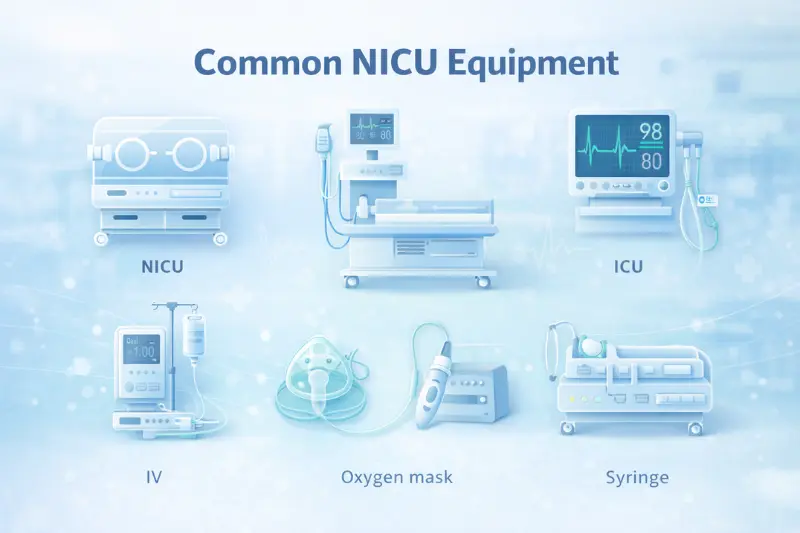
When parents enter NICU, machines can feel scary. Here’s what they usually mean:
Incubator (Isolette)
A closed bed that keeps baby:
- warm
- protected
- stable in temperature and humidity
Radiant Warmer
An open warmer bed for babies who need frequent procedures or monitoring.
Monitors
Track vital signs like:
- heart rate
- breathing rate
- oxygen levels
- temperature
IV Line (Intravenous)
A small tube in a vein to deliver:
- fluids
- medicines
- glucose
Feeding Tube
A thin tube that delivers milk to the stomach when a baby can’t feed safely yet.
Phototherapy
Blue-light treatment for jaundice.
Oxygen Support (Nasal Cannula / Oxygen Hood)
Helps babies breathe easier when they need extra oxygen.
CPAP / Ventilator
Used when babies need stronger breathing support.
Can Parents Hold a Baby in NICU?
In many cases, yes—even if the baby has an IV or oxygen support.
Kangaroo Care (Skin-to-Skin)
If your baby is stable, the NICU team may recommend kangaroo care, which can help:
- improve breathing and heart rate stability
- improve weight gain
- support breastfeeding
- reduce stress for baby and parents
If your baby is extremely premature, doctors may ask you to touch less at first because it can be stressful for the baby—this is normal and temporary.
What Parents Can Do to Help (Practical NICU Tips)
Simple ways you can help:
- visit regularly (even short visits help)
- talk softly, sing, or read to your baby
- do hand-hug touch (gentle touch, not rubbing)
- learn diaper changes and basic care when allowed
- pump breast milk if you can (even small amounts help)
Breast Milk Tip
Even if your baby can’t drink from the breast or bottle, your milk can be given through a feeding tube. Ask for:
- a pumping schedule
- milk storage rules
- lactation support
Questions to Ask the Doctor (Best NICU Checklist)
Keep these questions saved on your phone:
- What is the main reason my baby is in NICU?
- What is today’s biggest goal (breathing/feeding/weight)?
- What tests were done and what do results show?
- Is there any infection concern?
- When can we start kangaroo care?
- When will feeding by mouth start?
- What will discharge depend on?
- What risks should we watch for?
How Long Do Babies Stay in NICU?
It depends on the baby’s condition and development.
A NICU stay is usually longer when a baby:
- is born very early
- needs oxygen/ventilator support
- has feeding difficulties
- has infection or surgery needs
Some babies stay a few days, while others may stay weeks or months.
NICU Discharge Checklist (When Can Baby Go Home?)
Most NICUs discharge when the baby can:
- breathe without serious support
- maintain body temperature in an open crib
- feed safely (breast/bottle) or follow a safe feeding plan
- gain weight steadily
- have stable oxygen levels and fewer apnea spells
- parents understand home care instructions
Hospitals also teach parents:
- feeding routines
- medicine schedule (if any)
- warning signs to watch
- follow-up appointments
NICU vs ICU vs PICU (Quick Difference)
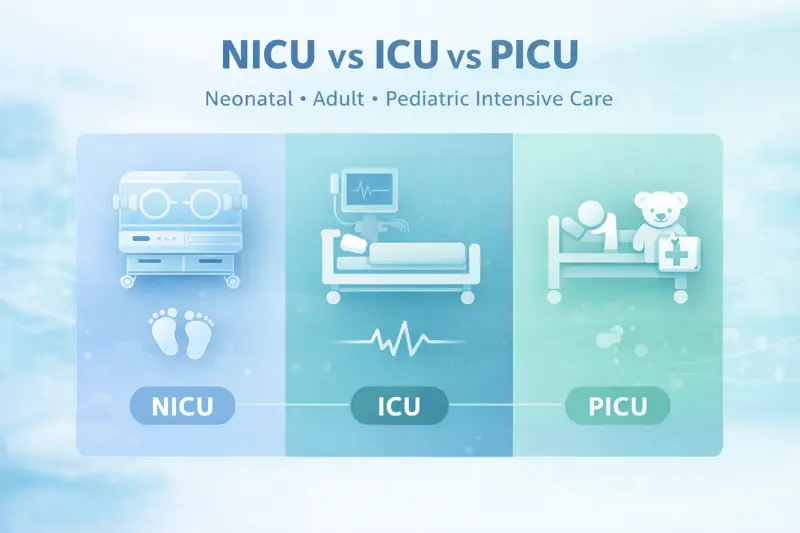
People often confuse these:
- NICU: newborn babies (0–28 days)
- PICU: infants/children
- ICU: adults
Frequently Asked Questions
Is NICU only for premature babies?
No. Full-term babies may go to NICU for jaundice, infection risk, low blood sugar, breathing trouble, or heart issues.
Does NICU mean my baby will have long-term problems?
Not always. Many NICU babies grow normally. Outcomes depend on the condition and how early the baby was born.
Can I breastfeed if my baby is in NICU?
Yes. Many mothers start with pumping first, then breastfeeding begins when the baby is ready.
Can I visit the NICU anytime?
Most NICUs allow parents anytime, but other visitors have limited hours. Hygiene rules are strict to protect babies.
Final Words
Hearing “your baby needs NICU” can feel terrifying. But NICUs exist because modern medicine can support newborns through the most delicate early days. Every tube, monitor, and light has a purpose: helping your baby become stable, strong, and ready for home.
You’re not alone in this. Ask questions, take support, and take care of yourself too—because your baby needs you strong.
