
Introduction
In medical emergencies, quick action can save lives. One such life-saving technique is CPR. Many people have heard the term, but not everyone knows its full form, meaning, and importance. This article explains the CPR full form, its purpose, and why it plays a crucial role in healthcare and emergency response.
CPR Full Form
You May Also Like It:
Tesamorelin: Benefits, Uses & Side Effects Guide
Prednisona: usos, efectos y cómo tomarla
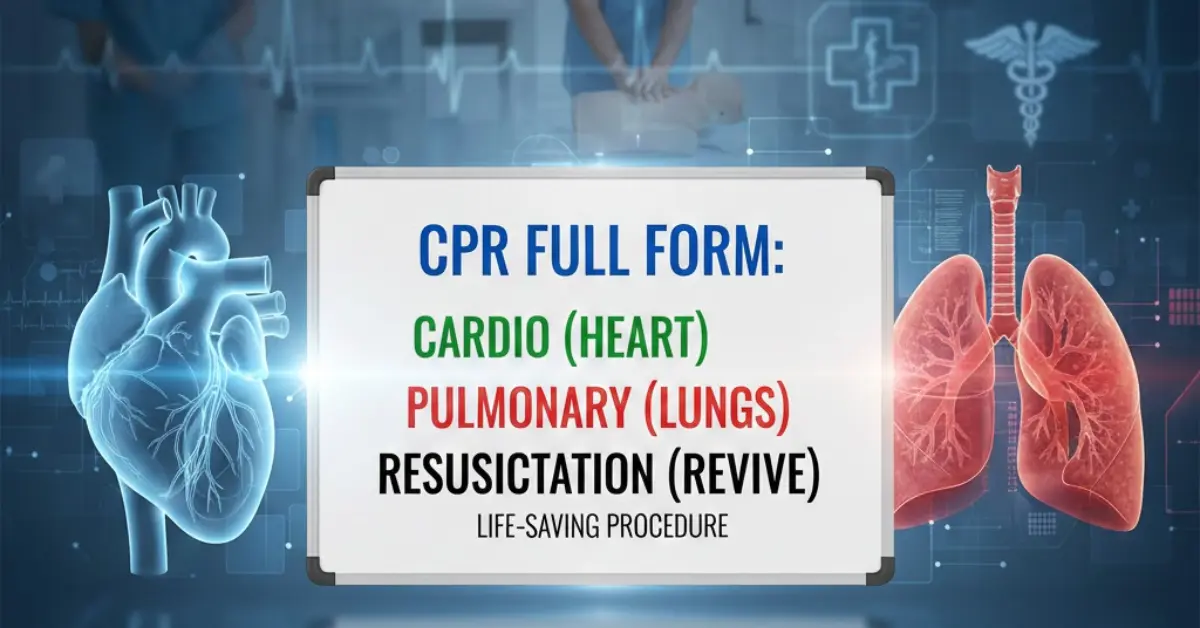
The full form of CPR is Cardiopulmonary Resuscitation.
- Cardio – related to the heart
- Pulmonary – related to the lungs
- Resuscitation – the act of reviving someone
CPR is an emergency medical procedure used when a person’s heartbeat or breathing has stopped.
What Is CPR?
CPR is a first-aid technique that helps maintain blood flow and oxygen supply to vital organs like the brain and heart during cardiac arrest or respiratory failure. It involves chest compressions and, in some cases, rescue breaths.
The main goal of CPR is to keep a person alive until professional medical help arrives.
When Is CPR Needed?
CPR is usually required in situations such as:
- Sudden cardiac arrest
- Drowning
- Severe breathing problems
- Electric shock
- Choking (when breathing stops)
- Accidents causing unconsciousness
Early CPR can double or even triple a person’s chance of survival.
Importance of CPR in Healthcare
You May Also Like It:
Gabapentina 300 mg: qué es y para qué sirve
Phenol Peel – Deep Skin Treatment That Works
CPR is one of the most important emergency medical skills. Its benefits include:
- Helps restore partial blood circulation
- Prevents brain damage due to lack of oxygen
- Increases survival chances during emergencies
- Buys critical time before advanced medical treatment
Healthcare professionals, paramedics, and even common citizens are encouraged to learn CPR.
Who Can Perform CPR?
CPR can be performed by:
- Doctors and nurses
- Paramedics and emergency responders
- Trained teachers and staff
- Ordinary people with basic CPR training
Basic CPR knowledge is often included in workplace safety programs and health education courses.
CPR in Public Awareness and Training
Many governments and health organizations promote CPR awareness through:
- First-aid training programs
- School and college health education
- Workplace safety courses
- Community health campaigns
Learning CPR is considered a valuable life skill that can help save family members, friends, or strangers.
Conclusion
The CPR full form, Cardiopulmonary Resuscitation, represents a vital emergency procedure in the healthcare field. CPR helps sustain life during critical moments when the heart or lungs stop functioning. Understanding CPR and learning how to perform it can make a real difference in saving lives.
You May Also Like It:
Tesamorelin: Benefits, Uses & Side Effects Guide
Prednisona: usos, efectos y cómo tomarla
Gabapentina 300 mg: qué es y para qué sirve
Phenol Peel – Deep Skin Treatment That Works
Testicular Calcium – Causes, Diagnosis and Care
