
In today’s world, abbreviations and acronyms are commonly used to simplify communication. One such term you may have encountered is CAD. But what exactly does CAD stand for, and how is it used in various industries? In this article, we’ll explain the full form of CAD, its significance in multiple domains, and provide you with some crucial insights that will enhance your understanding of this term.
What is the Full Form of CAD?

CAD full form Computer-Aided Design.
It refers to the use of computer software to facilitate and enhance the process of designing and drafting. CAD is a powerful tool widely used in industries such as architecture, engineering, manufacturing, and even animation.
While Computer-Aided Design is the most common meaning, CAD can also stand for different terms in various contexts, which we will explore further in this article.
CAD in Different Industries
The versatility of CAD is evident in its broad usage across different fields. Let’s break down its significance in some of the most prominent industries:
Architecture & Construction:
In architecture and construction, CAD is used to create precise blueprints, 3D models, and digital representations of buildings and structures. It allows architects to visualize their designs before any construction begins, making the process more efficient and reducing costly errors.
Key Benefits:
- Increased accuracy and precision in designs.
- Faster design modifications.
- Enhanced collaboration among architects, engineers, and contractors.
Engineering:
CAD is crucial in engineering disciplines, especially for creating technical drawings, schematics, and prototypes. Engineers use CAD software to design mechanical parts, electrical circuits, and civil structures.
Key Benefits:
- Reduces human error in designs.
- Streamlines the production process by offering clear specifications.
- Simplifies simulations for stress analysis and testing.
Manufacturing:
In manufacturing, CAD plays a vital role in the design of products before they are physically created. It helps manufacturers optimize designs, minimize material waste, and create detailed assembly instructions.
Key Benefits:
- Improves production efficiency.
- Reduces material costs through optimization.
- Facilitates the development of complex parts and systems.
Animation and Game Design:
In animation, video games, and film production, CAD is used to create 3D models and environments. This enables artists and designers to build intricate scenes and characters, which are then animated to bring them to life.
Key Benefits:
- Enables the creation of realistic 3D visuals.
- Enhances creative flexibility and design.
- Allows for the creation of highly detailed animations.
Automotive and Aerospace Industries:
In the automotive and aerospace industries, CAD is used to design vehicles and aircraft. Engineers can simulate aerodynamics, safety features, and other critical factors before actual production begins.
Key Benefits:
- Ensures optimal safety and performance.
- Reduces prototyping costs.
- Speeds up the design-to-production cycle.
Other Full Forms of CAD
While Computer-Aided Design is the most common interpretation, CAD can represent different terms depending on the context. Some of the other possible full forms of CAD include:
Coronary Artery Disease (CAD)
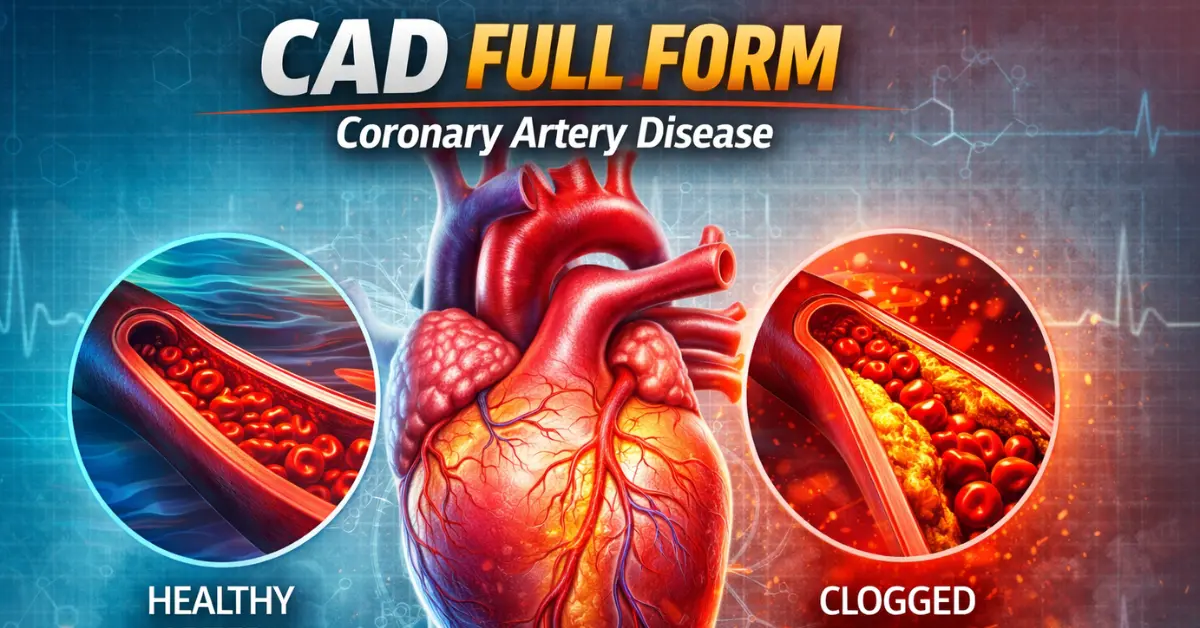
In the medical field, CAD stands for Coronary Artery Disease, which refers to the condition where the coronary arteries are narrowed or blocked due to plaque buildup. It’s a major cause of heart attacks and cardiovascular issues.
Symptoms of CAD include:
- Chest pain (angina).
- Shortness of breath.
- Fatigue and dizziness.
Cash Against Documents (CAD)
In business and finance, CAD can also mean Cash Against Documents. This refers to a payment method where the buyer pays for goods after receiving the documents needed to claim the goods.
- Application: Often used in international trade for security in transactions.
Civil Air Defense (CAD)
In military terms, CAD can stand for Civil Air Defense, which involves protective measures taken to safeguard a country’s airspace against attacks or natural disasters.
Importance of CAD in Today’s World
The significance of CAD in modern industries cannot be overstated. It has revolutionized how designs are created, refined, and implemented. By moving away from traditional drafting methods, CAD has made the design process faster, more accurate, and easier to modify.
Here are some reasons why CAD is indispensable in today’s world:
- Efficiency: Reduces the time taken to complete designs.
- Precision: Offers high-level accuracy that manual drawings cannot match.
- Cost-Effectiveness: Reduces material waste and labor costs.
- Collaboration: Enables easier collaboration and sharing of designs globally.
How to Get Started with CAD

If you’re interested in learning Computer-Aided Design (CAD) and exploring the software used in the industry, here’s how you can start:
- Choose the Right CAD Software: Popular options include AutoCAD, SolidWorks, Fusion 360, and CATIA, depending on your field of interest.
- Take a Course: There are many online tutorials and courses available to help you master CAD software.
- Practice Regularly: Like any skill, CAD requires practice. Start with simple projects and gradually work your way up.
Conclusion
In summary, CAD is an acronym that stands for Computer-Aided Design, and it plays a crucial role in a variety of industries such as architecture, engineering, manufacturing, and animation. While CAD can also refer to other terms, its primary application remains in designing and drafting digital representations for physical objects, structures, and systems.
By utilizing CAD, industries have gained the ability to create highly detailed and accurate designs with greater efficiency and at a lower cost, which ultimately benefits businesses and consumers alike.
