
Introduction
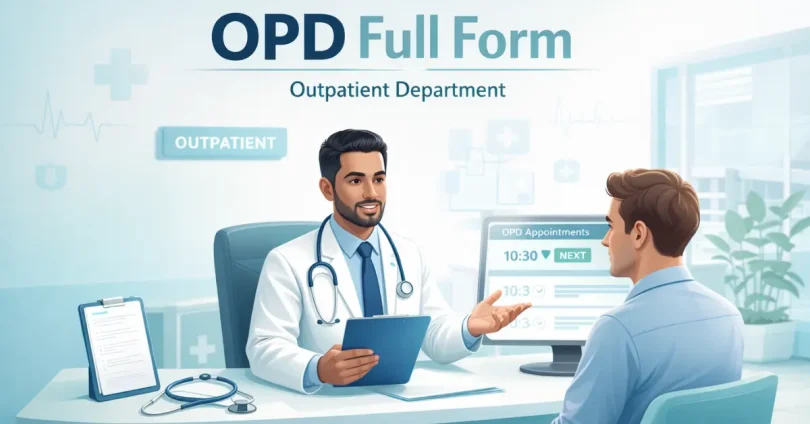
OPD Full Form is Outpatient Department. It is the hospital section where patients receive medical consultation, diagnosis, and minor treatments without staying overnight. OPD makes healthcare accessible, affordable, and convenient for everyday medical needs.
OPD Full Form
OPD Full Form stands for Outpatient Department.
The OPD is a section of a hospital or clinic where patients receive medical consultation, diagnosis, and treatment without being admitted for an overnight stay. It is the first and most common point of contact between patients and doctors for non-emergency medical problems.
What Is OPD in a Hospital?
The Outpatient Department (OPD) is designed for patients who need medical attention but do not require hospitalisation. Patients visit the OPD for doctor consultations, routine check-ups, diagnostic tests, minor treatments, and follow-up visits.
In simple words, if a patient comes to the hospital, gets treated, and goes home the same day, the treatment usually happens in the OPD.
Why Is OPD Important in Healthcare?
OPD plays a vital role in the healthcare system because it handles the majority of medical cases.
Key reasons why OPD is important:
- Reduces the burden on hospital beds
- Provides quick access to doctors
- Supports early diagnosis of diseases
- Makes health care more affordable
- Helps manage chronic illnesses effectively
Most common health problems are treated through OPD services rather than hospital admission.
How Does OPD Work? (Step-by-Step Process)
The OPD process is simple and patient-friendly:
- Registration
The patient registers at the OPD counter or reception by providing basic personal details and health complaints. - Doctor Consultation
The patient meets a doctor from the relevant department based on symptoms. - Diagnosis and Tests
The doctor may suggest diagnostic tests such as blood tests, X-rays, or scans if required. - Treatment or Prescription
Medicines or treatment advice is provided based on the diagnosis. - Follow-Up
The patient may be asked to return for follow-up visits if necessary.
Services Provided in OPD
OPD services cover a wide range of medical needs, including:
- Doctor consultations
- Diagnostic tests (blood tests, X-rays, MRI, CT scans)
- Minor medical procedures
- Prescription of medicines
- Routine health check-ups
- Vaccinations and immunisations
- Physiotherapy sessions
- Preventive health screenings
These services help patients receive timely medical care without hospital admission.
Types of OPD Services in a Hospital
Hospitals usually divide OPD services into different sections for better patient management.
Common types of OPD include:
General OPD
Handles common illnesses such as fever, cold, cough, headache, and infections.
Specialised OPD
Focuses on specific medical fields such as:
- Orthopaedics
- Gynaecology
- Dermatology
- Neurology
- Cardiology
Paediatric OPD
Dedicated to children’s healthcare, including growth monitoring and vaccinations.
Surgical OPD
Manages pre-surgery and post-surgery consultations.
Diagnostic OPD
Provides diagnostic services like imaging and laboratory tests.
Emergency OPD
Treats urgent but non-life-threatening conditions such as minor injuries or wounds.
OPD vs IPD: Key Differences
Many people confuse OPD with IPD, but both are different hospital services.
OPD:
- No hospital admission required
- Short visit duration
- Lower medical cost
- Suitable for minor or routine treatment
IPD:
- Requires hospital admission
- Overnight stay needed
- Higher treatment cost
- Used for serious or surgical conditions
Understanding this difference helps patients choose the right type of care.
Who Uses OPD Services?
OPD services are suitable for:
- Students and working professionals
- Senior citizens
- Children and infants
- Patients with chronic diseases
- People needing regular check-ups
- Patients requiring follow-up consultations
Cost of OPD Services in India
The cost of OPD services depends on:
- Type of hospital (government or private)
- Doctor’s experience
- City and location
- Type of tests required
On average:
- Doctor consultation fees may range from ₹300 to ₹2,000
- Diagnostic tests may cost extra depending on complexity
OPD treatment is generally much more affordable than inpatient care.
OPD and Health Insurance
Traditionally, health insurance focused on hospitalisation expenses. However, many modern insurance plans now offer OPD coverage.
OPD insurance may cover:
- Doctor consultation fees
- Diagnostic tests
- Medicines
- Preventive health check-ups
OPD cover is especially useful for people who require frequent medical visits.
OPD Full Form in Different Contexts
Although OPD mostly refers to medical care, its full form remains the same across:
- Government hospitals
- Private hospitals
- Clinics
- Medical colleges
In all healthcare settings, OPD means Outpatient Department.
Frequently Asked Questions (FAQs)
What is the OPD full form in medical terms?
OPD stands for Outpatient Department.
What type of treatment is given in OPD?
OPD provides consultations, diagnostic tests, minor procedures, and follow-up care without hospital admission.
Is OPD treatment cheaper than IPD?
Yes, OPD treatment is generally cheaper because it does not involve hospital stay charges.
Can OPD patients undergo surgery?
Only minor procedures are done in OPD. Major surgeries require IPD admission.
Do all hospitals have OPD services?
Yes, almost all hospitals and clinics offer OPD services.
Conclusion
Understanding the OPD full form and its role in healthcare helps patients make informed medical decisions. OPD services provide accessible, affordable, and efficient healthcare for everyday medical needs. From consultations and diagnostics to preventive care, the Outpatient Department forms the backbone of modern healthcare systems.